

This content is for financial professionals only. Not a financial professional? Visit our consumer site.
Women face unique challenges
Women and men have different experiences, needs and priorities, but we don’t often see our industry taking these differences into account. We must keep in mind that every woman’s experience is singularly and beautifully their own. We’ve done our best to capture some commonly shared experiences and sentiments with our Own It campaign – designed with women’s unique needs in mind to help financial professionals provide tailored solutions that help ensure financial security now and in the future.
Women often face unique challenges that can significantly impact their financial security. There is no single experience that defines every woman’s life so it’s important to always ask questions and avoid assumptions. However, there are several common factors many women experience that are important to keep in mind:
Longer life expectancy
On average, women live almost six years longer than men. It’s important for women to ensure they have enough assets to last their entire lives.1
Primary caregiver
More than 75% of caregivers are women – taking care of aging parents and relatives, while often caring for their own children. Many women take time off work to care for family members, which creates a need to catch up on their retirement savings. The average length of time a caregiver provides unpaid care to a loved one is 4.5 years.2
Income wage gap
Although we’ve seen increases over time, women earn 16% less than men on average.3 This wage gap can significantly impact their retirement years.

A different sales process
The conventional sales process often follows a "male-centric" approach, which might not always resonate with how many women prefer to make financial decisions. To foster a more inclusive and collaborative sales experience, consider these tips:
Engage in meaningful conversations
Introduce yourself and share some of your personal interests to create a connection. Ask open-ended, clarifying questions to ensure a deep understanding of their financial needs.
Include all voices in the discussion
When working with couples, it's essential to involve both partners in the conversation and give each person the space and time to share their perspectives. Sometimes, meeting with each partner individually can provide insights into their unique financial goals and concerns.
Pay attention to non-verbal cues
Non-verbal communication plays a significant role in understanding and building trust. Maintaining eye contact, actively listening, taking notes, and remembering details about their loved ones can demonstrate your investment in their well-being, laying the foundation for future interactions.
Allow time for reflection
Many individuals appreciate having time to consider information. Providing related materials and allowing time for reflection can empower them to conduct their own research and make informed decisions.
Women often juggle multiple roles, which can influence their financial planning and preparedness for unexpected events. Our tools and resources are designed to support you in helping your clients feel confident and empowered in managing their finances.

Are you a female financial professional?
We can help take your practice to the next level. We've highlighted 3 key disciplines for female financial professionals.
Learn moreA day in the life
Explore these real-life inspired personas to better understand the goals, challenges and opportunities women may encounter at different stages of life. From building a career and raising a family to preparing for retirement and creating a legacy, each story highlights common needs and potential solutions that can help support financial confidence today and in the future.

Darla
- Age: 65
- Divorced with no kids
- Musician and active in the community

Claudia
- Age: 60
- Executive and mother
- Would like to leave a legacy

Beth
- Age: 51
- Remarried with a blended family
- Wants to be prepared for anything

Beth
My partner and I married later in life and have built a loving blended family, each bringing children from previous marriages into the relationship. While we deeply value the life we’ve created together, we also recognize that blending families brings unique financial and emotional considerations. We want to make decisions that feel fair and thoughtful to everyone involved while balancing the needs of each other and our respective children.
As we plan for the future, we want confidence that no matter what life brings, both our spouse and our children will be protected. We think often about “what-if” scenarios, how to provide financial security for the surviving spouse, how to preserve fairness for children from prior relationships and how to create a plan that continues to work whether we live long lives or face unexpected challenges earlier than anticipated.
Clarity and communication are especially important to us because we’ve seen how unclear planning can create confusion, tension or hurt feelings within families. We want our wishes to be clearly documented and easy for everyone to understand so there is less uncertainty during already emotional times. Having a coordinated strategy that addresses protection, retirement income and legacy planning gives us greater confidence that our intentions will be carried out thoughtfully and fairly.
Ultimately, our goal is about more than finances — it’s about preserving harmony within the family we’ve built together. We want a plan that protects one another, respects our children, provides flexibility and security throughout retirement, and leaves behind a legacy that reflects the love, care, and responsibility we feel toward the people who matter most.
Key consideration:
Create harmony and fairness with new spouse and children from both families.
Questions to consider:
- What does “fair” mean in your family — equal or intentional?
- What happens if one of you dies early — who controls assets? How will you account for children from the previous relationship if one of you inherits everything?
- Are there assets that would be more efficient to leave to each other versus children?
Potential life insurance solutions (Primary tool)
- Life insurance: Legacy & Trust Planning by structuring assets and beneficiary designations to support children from prior relationships, promote inheritance equity and ensure each person's estate wishes are implemented as intended.
Potential annuity solutions (Secondary tool)
- Annuities: Income stability/more saving pre-retirement to reduce asset liquidation tensions if one spouse passes away.
Sales strategy to help tell the story
Life insurance
Please note: potential solutions are not limited to the above. Please consult one of our sales associates to discuss additional options.

Darla
I’ve built a career and lifestyle grounded in practicality, discipline and enjoying what matters most. I’ve always considered myself a thoughtful saver and a sensible spender, which has allowed me to approach retirement with confidence and flexibility. As I enter this next chapter, I’m excited to invest in experiences and passions that bring me joy, including transforming my garage into a comfortable music space where my band and I can rehearse and spend time together.
At the same time, being single and without children has made me especially thoughtful about planning for the future. I want to create a retirement strategy that supports both independence and security as I age, while helping ensure I can continue living comfortably no matter what life brings. Having a plan in place that addresses income, healthcare considerations, long-term stability and legacy is important to me because I value maintaining control over my lifestyle and decisions.
Supporting the local nonprofit I volunteer with is deeply meaningful to me, and I would like my financial plan to include leaving a lasting contribution to an organization that has been important in my life.
For me, retirement planning is not just about finances, it’s about creating freedom, protecting my future, supporting the people and causes I care about and making sure the life I’ve worked hard to build continues to reflect who I am.
Key consideration:
This is about protecting Darla from the four things that might take away her independence: markets, longevity, health and decision risk.
Questions to consider:
- What does ‘financial independence’ really mean to you at age 80+?
- Would future guaranteed income give you more freedom to spend confidently today and give you piece of mind?
- How do you want to support the nonprofit — during life, at death or both? Is there anyone else you’d hope to leave something behind for?
Potential life insurance solutions
- Premier Variable Universal Life (VUL) and Eclipse Accumulator II Indexed Universal Life (IUL): Supplemental tax-advantaged bucket in retirement for tax sensitivity as single filer. It also offers an opportunity to leave a legacy to charity.
- Long-term care and chronic illness solutions: Avoids putting burden onto others and allows for financial independence.
Potential annuity solutions
- IncomeToday! 2.0 Single Premium Immediate Annuity (SPIA): If leaving a legacy is not a primary goal, guaranteed lifetime income can offer significant advantages. It provides dependable income throughout retirement without concern over how remaining assets may be managed or spent by a spouse or heirs. When funded with qualified assets, it can also help meet future Required Minimum Distribution (RMD) obligations and facilitate Qualified Charitable Dontations (QCDs), all while delivering valuable protection against longevity risk.
- AccumuLink Advance Registered Indexed Linked Annuity (RILA): Offers growth with guardrails for a solo decision-maker w/ flexibility option to use as income in the future + option for Accelerated Death Benefits (ADB) if uninsurable.
Sales strategy to help tell the story
Life insurance
Annuities
- IncomeToday! 2.0 and the Advance Withdrawal Benefit
- AccumuLink Advance and the Accelerated Death Benefit Rider
Please note: potential solutions are not limited to the above. Please consult one of our sales associates to discuss additional options.
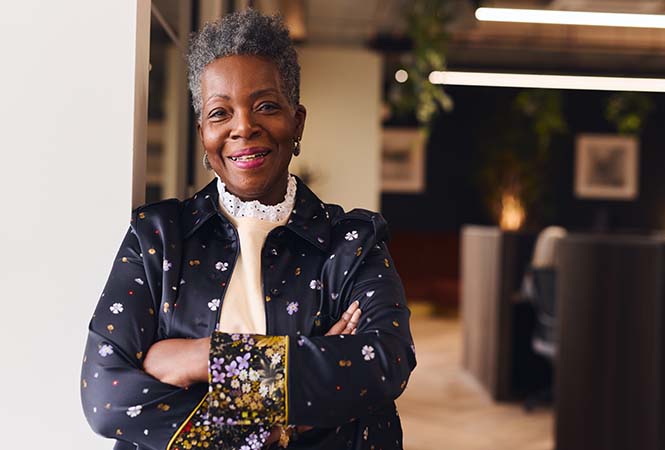
Claudia
As an executive and the primary earner for our family, much of my life has been focused on balancing a demanding career while ensuring our children had the opportunities and support they needed to thrive. My husband and I have always approached money thoughtfully, saving where we could while prioritizing our family’s needs and future.
Now that our children are grown and building lives of their own, we’re entering a new stage focused more on freedom, flexibility and enjoying the life we worked so hard to create. We look forward to traveling, spending meaningful time with family and friends and enjoying experiences we postponed while raising our family and building our careers.
At the same time, we understand this transition brings important financial and emotional considerations. We want confidence that we can maintain our lifestyle, navigate healthcare and market uncertainties and preserve our independence and flexibility as we age without worrying about outliving our assets.
Because I was the primary income earner, protecting my spouse and preserving the financial security of our family remain top priorities. Retirement planning for us is about creating dependable income, protecting the assets we’ve accumulated and ensuring the people we love are cared for while also leaving a lasting legacy for the next generation.
Key consideration:
Claudia is hoping to create a plan that lasts and have freedom to enjoy life without worry. They’ve been working hard to get their children in a positive place and support them and now it’s time for them to look out for each other.
Questions to consider:
- If you passed first, how would your spouse replace your income or decision-making?
- What would “permission to retire” look like mathematically?
- How would a market downturn impact your current plans?
Potential life insurance solutions
- Survivorship life insurance: Helps preserve assets for heirs, equalize inheritances, fund estate tax obligations and transfer wealth in a tax-efficient manner.
- Eclipse Accumulator II Indexed Universal Life (IUL) and Eclipse Protector II IUL: Offers income replacement, legacy leverage for children and another tax efficient bucket of income.
- Long-term care and chronic illness solutions: Provides protection from health disruption.
Potential annuity solutions
- AccumuLink Advance Registered Indexed Linked Annuity (RILA): Growth with guardrails for a solo decision-maker w/ flexibility option to use as income in the future + option for Accelerated Death Benefit if uninsurable.
- SecureLink Ultra fixed indexed Annuity: Combines growth potential plus protection as clients earn interest linked to the changes in performance of an index. Additional features help meet the needs for many unique situations, including a term guarantee option.
Sales strategy to help tell the story
Life insurance
Please note: potential solutions are not limited to the above. Please consult one of our sales associates to discuss additional options.

Ellie
- Age: 43
- Career driven
- Partner is a farmer

Heather
- Age: 33
- Stay-at-home mother
- Full-time activity manager

Cora
- Age: 24
- New college graduate
- Just entering the workforce

Cora
I’ve recently graduated from college and am excited to begin the next chapter of my life with my first full-time position at a large corporation. For the first time, I have a steady income, employee benefits and the opportunity to start building real financial independence. I know the decisions I make now can shape my long-term future, so I want to be intentional about creating strong financial habits and a solid foundation early in my career.
As a graduation gift, my parents gave me a small amount of money, and I see it as more than just extra cash, I see it as an opportunity to get ahead financially. While I’ve considered using it for savings or future goals like a home purchase, I’m also interested in solutions that can provide flexibility, long-term growth potential and protection as my life evolves over time.
That's why solutions that can provide both protection and long-term financial growth have become appealing to me. The idea of building financial resources for the future while securing coverage at a young and healthy age feels like a smart, forward-looking strategy. I like that it offers both security and flexibility, allowing me to adapt as my career evolves, my income changes and new responsibilities emerge.
Ultimately, I want to make thoughtful financial decisions that balance growth, protection and flexibility. My goal is to create a financial plan that can grow alongside me, helping me build confidence, maintain options for the future and establish a strong foundation for whatever opportunities and responsibilities life may bring.
Key consideration:
- Cora needs full flexibility as she has no idea what is in store next, but she wants to make sure she makes the most of the money she received.
Questions to consider:
- If/when you get married or have a family someday, how important is this protection? How much would it cost then versus now?
- Do you have outstanding liabilities you need this coverage for?
- How much flexibility do you want if your life changes in 5–10 years?
Potential life insurance solutions
- Eclipse Accumulator II Indexed Universal Life or Premier Variable Universal Life: both offer tax-advantaged accumulation and allows the client to lock-in insurability early.
- Advantage Elite Select term with Extended Conversion agreement: provides protection along with flexibility to convert to permanent protection in the future.
Potential annuity solutions
- MultiOption Momentum Investment Only Variable Annuity (IOVA): this investment only variable annuity allows clients to build a customized investment portfolio and have the flexibility to add options based on risk comfort level and long-term goals.
- AccumuLink Advance Registered Indexed Linked Annuity (RILA): helps balance risk and return and offers flexibility to adjust over time. Includes a 1% buffer option for your most growth-minded investors.
Sales strategy to help tell the story
Life insurance
Please note: potential solutions are not limited to the above. Please consult one of our sales associates to discuss additional options.

Ellie
I’ve spent most of my career working for a Fortune 500 company, which provided our family with stable income and employer-sponsored benefits, while my partner built a life around running their family farm as a self-employed business owner. Together, we’ve built a strong life, but our financial situation reflects two very different realities, one centered on predictable paychecks and benefits, and the other shaped by seasonal income, market uncertainty and the long-term responsibility of maintaining a family farm.
As retirement approaches, we recognize that this transition looks different for us than it might for other couples. While I’m preparing to step away from a traditional career, my partner’s work doesn’t come with a defined retirement date or guaranteed retirement benefits. The farm represents both a source of income and an important family legacy, which means our planning needs to balance personal financial security with preserving an asset that carries deep emotional and long-term significance.
We want confidence that we can maintain financial stability no matter what the future brings. That includes planning for healthcare costs once employer benefits are no longer available, creating reliable retirement income that is not solely dependent on the farm’s performance, and ensuring the surviving spouse is protected if something unexpected happens. We also want flexibility so my partner can continue farming by choice rather than financial necessity as we age.
Ultimately, our goal is to create a coordinated plan that provides protection, dependable income and long-term security while preserving the value and future of the farm. By addressing these questions now, we hope to move into retirement with greater confidence, knowing we’ve created a strategy that supports our lifestyle, protects what we’ve built together and provides peace of mind for whatever the future may hold.
Key consideration:
- The couple is operating from two different lenses — looking at asset and longevity risk
- as well as how they will pass the farm to the next generation
Questions to consider:
- How dependent is your retirement on the farm performing well?
- What happens to income if farming slows or stops?
- Who takes over the farm, or do you want to keep it? If there is one or more identified family members to take over — how do you address the other children?
Potential life insurance solutions
- Life insurance solutions: Offers liquidity for estate equalization or continuation. With the no-lapse guarantee agreement (NLGA)
- Long-term care and chronic illness solutions: Protects the farm from a forced sale due to care costs or inability to operate.
Potential annuity solutions
- IncomeToday! 2.0: Using Ellie’s IRA or qualified funds from working to grow, protect and create an income stream in case the farm underperforms.
- Additional annuity solutions
Sales strategy to help tell the story
Life insurance
Please note: Potential solutions are not limited to the above. Please consult one of our sales associates to discuss other options.

Heather
As a stay-at-home mother to three boys ranging from eight to fifteen, my days revolve around keeping our family organized, supported and moving forward. My wife and I intentionally decided early on that I would manage the household while she focused on her career, knowing that balancing childcare, school schedules, activities and the day-to-day demands of family life would require constant coordination and care.
Although I don’t earn a traditional paycheck, the role I play is essential to our family’s stability and routine. I manage the logistics, provide consistency for our children and help create the structure that allows our household to function smoothly. Over time, we’ve realized that if I were unable to fulfill that role due to illness, injury or an unexpected loss, replacing that support would create both emotional and financial strain for our family.
Because of that, we want a plan that prepares us for a variety of life scenarios, not just worst-case situations. We want confidence that if something happened to me, our children’s routines and care could continue without placing overwhelming pressure on my wife or forcing difficult financial decisions during an already emotional time. We’re also thinking long term about protecting my wife’s income, creating financial stability as our family grows and ensuring the value of my contribution is reflected in our overall financial plan.
Ultimately, this is about protecting the life we’ve built together and creating peace of mind for our family. We want a thoughtful plan that helps provide stability, flexibility and long-term security so that no matter what the future brings, our children remain supported, our household remains secure and neither of us has to navigate life’s uncertainties alone.
Key consideration:
- Deeply involved in day-to-day life, but less deeply connected to the family finances. Understanding these decisions are critical and can leave the caregiving spouse extremely vulnerable.
Questions to consider:
- What would it cost to replace everything you do today?
- How long could you pay bills if something happened to your spouse today?
- What is your plan for future college or university savings for the children?
- Do you want temporary protection or permanent flexibility?
Do you want temporary protection or permanent flexibility?
- Eclipse Accumulator II Indexed Universal Life: Offers protection now with flexibility for the future. Can also grow cash value and increase the death benefit.
- Advantage Elite Select term with Chronic Illness Conversion Agreement: Can provide income at time of death to replace services.
- Long-term care and chronic illness solutions: Offers disability-of-function protection.
Sales strategy to help tell the story
Please note: Potential solutions are not limited to the above. Please consult one of our sales associates to discuss other options.
1. "Life expectancy for men in U.S. falls to 73 years – six years less than for women", per study. Statnews.com. November 13, 2023.
2. "Caregiving in the US research report," July 24, 2025.
3. "Equal Pay Day: March 26, 2026", Census.gov March 23, 2026.
The personas listed are hypothetical examples for illustrative purposes only.
An annuity is intended to be a long-term, tax-deferred retirement vehicle. Earnings are taxable as ordinary income when distributed, and if withdrawn before age 59½, may be subject to a 10% federal tax penalty. If the annuity will fund an IRA or other tax qualified plan, the tax deferral feature offers no additional value. Qualified distributions from a Roth IRA are generally excluded from gross income, but taxes and penalties may apply to non-qualified distributions. Please consult a tax advisor for specific information. There are charges and expenses associated with annuities, such as surrender charges (deferred sales charges) for early withdrawals. Variable annuities have additional expenses such as mortality and expense risk, administrative charge, investment management fees and rider fees. Variable sub accounts of annuities are subject to market fluctuation, investment risk and loss of principal.
Please keep in mind that the primary reason to purchase a life insurance product is the death benefit.
Product features and availability may vary by state.
Life insurance products contain charges, such as Cost of Insurance Charge, Cash Extra Charge, and Additional Agreements Charge (which we refer to as mortality charges), and Premium Charge, Monthly Policy Charge, Policy Issue Charge, Transaction Charge, Index Segment Charge, and Surrender Charge (which we refer to as expense charges). These charges may increase over time, and the policies may contain restrictions, such as surrender periods. Variable life insurance products contain fees, such as mortality and expense charges, and may contain restrictions, such as surrender periods. There may also be underlying fund charges and expenses, and additional charges for riders that customize a policy to fit individual needs. Charges and expenses may increase over time. The variable investment options are subject to market risk, including loss of principal.
Guarantees are based on the claims paying ability of the issuing company.
Policy loans and withdrawals may create an adverse tax result in the event of lapse or policy surrender and will reduce both the surrender value and death benefit. Withdrawals may be subject to taxation within the first fifteen years of the contract. Clients should consult their tax advisor when considering taking a policy loan or withdrawal.
The No Lapse Guarantee Agreement (NLGA) is subject to the terms and conditions contained in the policy and may not be in effect even if premium payments are made. Please review the policy carefully.
IncomeToday! 2.0 is a single payment immediate annuity. The guarantees in IncomeToday! 2.0 are subject to the financial strength and claims-paying ability of the issuing insurance company. One should thoroughly review their contract for specific details of the product features and costs.
The Accelerated Death Benefit Rider is not long-term care insurance. It is not a qualified benefit under the Internal Revenue Code. An individual may not purchase this optional death benefit rider if they are currently in a nursing home, skilled nursing facility or unable to perform any one of the six ADLs. The Accelerated Death Benefit Rider provides an option to accelerate death benefit proceeds in the event that the owner becomes chronically or terminally ill.
Additional agreements may be available. Agreements may be subject to additional costs and restrictions. Agreements may not be available in all states or may exist under a different name in various states and may not be available in combination with other agreements.
Long-term care insurance may cover care such as nursing care, home and community-based care, and informal care. Please ensure that your clients consult a tax advisor regarding long-term care benefit payments, or when taking a loan or withdrawal from a life insurance contract.
Chronic illness coverage may not cover all of the costs associated with chronic illness. Please ensure that your clients consult a tax advisor regarding chronic illness benefit payments, or when taking a loan or withdrawal from a life insurance contract.
This information should not be considered as tax or legal advice. Clients should consult their tax or legal advisor regarding their own tax or legal situation.
For financial professional use only. Not for use with the public. This material may not be reproduced in any form where it is accessible to the general public.
DOFU 7-2026
5725833